


As a passenger, you usually did nothing to cause the crash, yet you still carry the physical and financial consequences. You may start hearing different versions of what happened from drivers, police, and insurance adjusters, making it difficult to know where you stand.
Preliminary state data shows 381 fatal crashes across Nevada in 2024, and Clark County recorded 293 road deaths, making 2024 the deadliest year on record for the Las Vegas area. Nationally, passenger vehicle occupants account for most traffic deaths, making up about 59 percent of crash fatalities in 2023.
So if you were hurt as a passenger, your situation is unfortunately common, but your injuries and losses are personal. This article explains how passenger injury claims work in Nevada, who may be responsible for your injuries, and what steps you should take to protect your health and legal rights.
If you were hurt while riding in a rideshare, taxi, or bus, many of the same legal principles still apply, but the claim can involve additional insurance policies, commercial carriers, or public transportation entities. Whether you were a passenger in an Uber, Lyft, cab, shuttle-style service, or city bus, it is important to identify every possible source of coverage early and preserve evidence from the start.
Who Pays for a Passenger’s Injuries in Nevada?
Nevada follows an at-fault system. This means the driver who caused the crash is legally responsible for your injuries and losses, typically through their insurance policy.
Practically, this works like this:
- An insurance company investigates the crash.
- They decide which driver (or drivers) was careless or broke the rules of the road.
- The at-fault driver’s liability insurance is the primary source of compensation for people who were injured, including passengers.
Nevada also uses a modified comparative negligence system. In most cases, passengers are not assigned fault. However, if a passenger’s actions contributed to the situation, their compensation may be reduced. It is extremely rare for a passenger to be found primarily at fault unless their conduct directly created a dangerous situation. Passengers often have access to multiple insurance policies, which can increase the total recovery available.
As a passenger, you are usually not blamed for causing the crash because you were not the one driving or controlling the vehicle. The focus is almost always on the drivers and their actions, not on you.
The only time your conduct might be questioned is if you did something clearly unsafe that contributed to what happened, such as grabbing the steering wheel or getting into a car knowing the driver was extremely intoxicated. Even then, that issue is handled as a percentage of fault, not an all-or-nothing rule.
Passengers are often allowed to pursue claims against multiple insurance policies at the same time, including:
- The at-fault driver
- The driver of the vehicle they were in
- Their own insurance coverage in certain situations
Who You May Have a Claim Against as a Passenger?
As a passenger, your passenger injury claim is usually aimed at one or more drivers, not at yourself. Your main options are:
The At-Fault Driver of the Other Vehicle
If another driver clearly caused the crash, their liability insurance is often your primary source of compensation. You or your lawyer would bring a claim against that driver’s policy for medical bills, lost income, and other losses.
Your Own Driver (Friend, Family Member, or Rideshare Driver)
If the person driving the car you were riding in contributed to or caused the collision, you may also bring a passenger injury claim against their liability coverage.
This applies even if they are someone you know well. In Nevada’s fault system, the insurer still has a legal duty to evaluate and handle your claim.
If you were injured as a passenger in a rideshare, taxi, or bus accident in Las Vegas, your claim may involve more than a single driver. In a rideshare case, there may be questions about the driver’s coverage and the rideshare company’s insurance. In a taxi accident, the claim may involve the cab driver, the taxi company, or another negligent driver. In a bus accident, liability may rest with the bus driver, a private bus company, another motorist, or a public transit agency, depending on how the crash happened.
Multiple Drivers at the Same Time
In many Las Vegas crashes, fault is shared. One driver might be speeding while the other runs a red light.
Under Nevada’s modified comparative negligence rules, each driver can be assigned a percentage of fault, and you may have claims against more than one insurance policy. Each insurer then pays its share according to the percentage of fault assigned to its driver.
Nevada’s comparative negligence law technically applies to everyone involved, including passengers. In practice, passengers are rarely assigned fault unless they clearly added to the danger, such as seriously distracting the driver or refusing to use a seatbelt in a way that clearly worsened their injuries.
When that happens, the law does not erase your claim, but it can reduce the amount you receive in proportion to the share of fault assigned to you.
What To Do Immediately After a Las Vegas Car Accident as a Passenger?
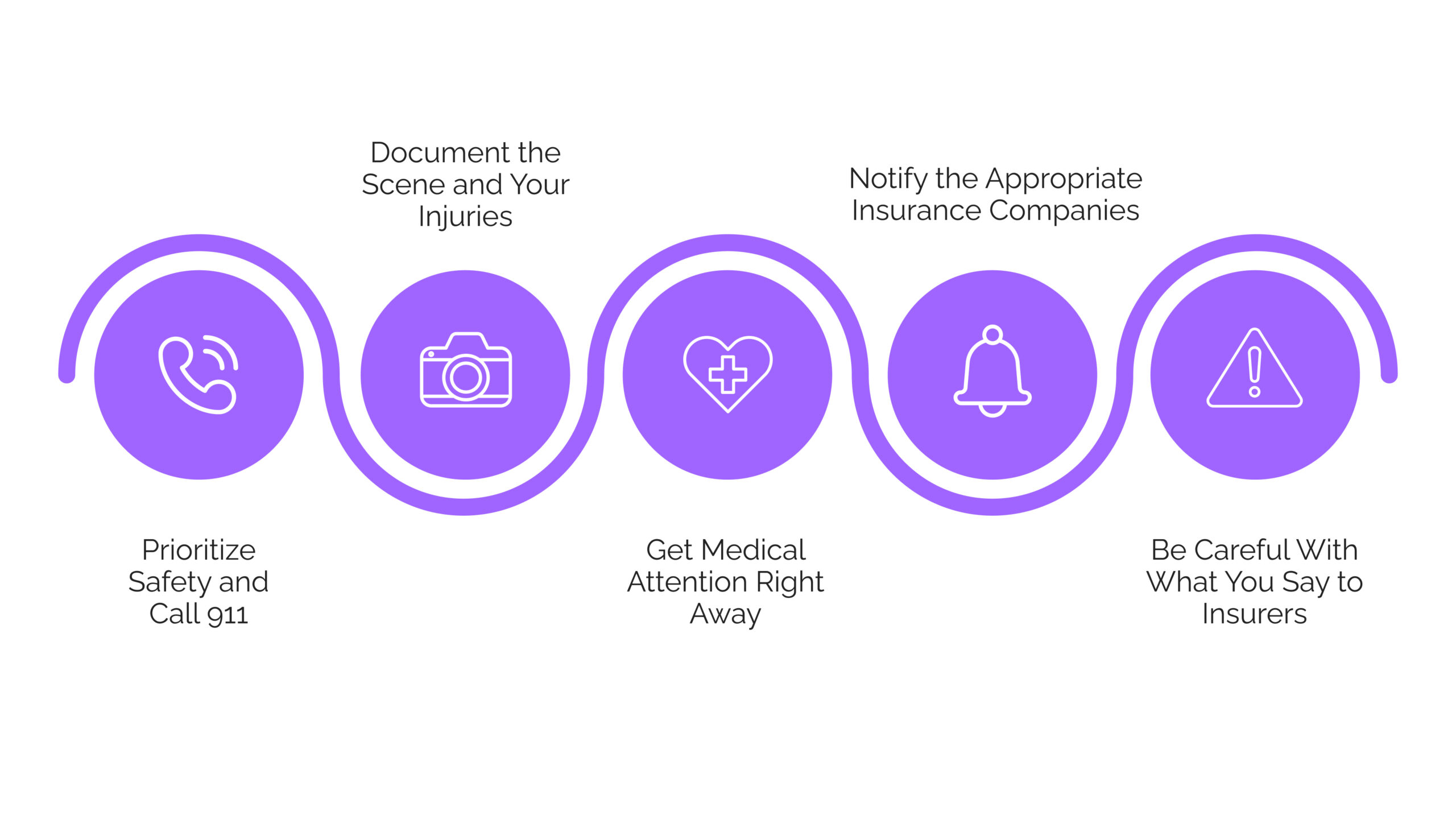
- Prioritize Safety and Call 911
Move to a safe area if you can and call 911, or ask someone nearby to do so, especially when injuries are involved. A police report creates an official, neutral record of the crash that insurers rely on when evaluating passenger injury claims and determining fault.
- Document the Scene and Your Injuries
This includes photos and videos of vehicles, roads, traffic signals, and visible injuries.
Collect information:
-
- Names, contact details, and driver’s license numbers of all drivers
- Insurance details and plate numbers
- Names and contact details of any witnesses
- Names, contact details, and driver’s license numbers of all drivers
Passengers should keep their own set of photos and information, rather than relying solely on the driver.
- Get Medical Attention Right Away
Even if your injuries seem minor, seek medical care immediately. Some conditions, like whiplash or concussions, may not appear right away. It is critical to have proper documentation of all injuries. Strong documentation can significantly improve the outcome of your claim.
- Notify the Appropriate Insurance Companies
-
- Driver’s insurer: If another driver is at fault, claims usually go through that driver’s liability policy.
- Your driver’s insurer: If your driver contributed to the crash, you may also have a claim here.
- Rideshare insurer: If you were a passenger in an Uber or Lyft, there may also be coverage tied to the rideshare trip, depending on when the crash occurred and which driver was at fault.
- Taxi company or commercial carrier insurer: If you were riding in a taxi or other paid passenger vehicle, the company’s commercial insurance may be part of the claim.
- Bus operator or transit agency: If the crash involved a private bus company or public transportation provider, reporting the incident quickly and identifying the correct entity is especially important.
- Your own policy:
- Medical payments coverage, if you have it, might help with medical bills regardless of fault.
- Uninsured/underinsured motorist (UM/UIM) coverage can be important if the at-fault driver has no or low limits of liability.
- Medical payments coverage, if you have it, might help with medical bills regardless of fault.
- Driver’s insurer: If another driver is at fault, claims usually go through that driver’s liability policy.
- Be Careful With What You Say to Insurers
Stick to facts, avoid guessing, and minimize injuries. Avoid recorded statements, broad medical record authorizations, or quick settlement offers before you understand the full extent of injuries and financial losses.
- Watch What You Say To Others
Avoid making statements about fault at the scene or to insurance companies. Even casual comments can be used later in both injury claims and potential traffic-related proceedings. This includes talking to police, witnesses, bystanders, or either of the involved parties.
What Compensation Passengers May Recover in Nevada
Common types of damages in passenger injury claims include:
|
Type of Compensation |
Description |
|
Medical expenses |
ER visits, diagnostic tests, follow-ups, physical therapy, and medication. |
|
Lost income |
If injuries keep the passenger from working, there is a partial wage loss. |
|
Pain and suffering |
Physical pain and emotional distress. |
|
Future costs |
Ongoing treatment, long-term limitations, if supported by medical evidence. |
The amount depends on injury severity, insurance policy limits, and available evidence.
Statute of Limitations for Passenger Injury Claims
In Nevada, you generally have two years from the date of the crash to file a personal injury lawsuit, including passenger injury claims. If you miss this deadline, you usually lose your right to sue.
However, you should start the insurance claim process well in advance. The longer you wait, the greater the risk that evidence will disappear, witnesses will forget details, and medical records will become harder to link clearly to the crash. Acting promptly strengthens your position when negotiating with insurers and gives you more options if settlement talks stall.
When To Talk to a Las Vegas Car Accident Lawyer
Below are common scenarios in which seeking legal assistance can be especially valuable:
- Serious injuries, hospitalizations, or long-term treatment.
- Disputes between drivers about who was at fault.
- Multiple policies and insurers involved (other driver, your driver, rental, rideshare).
- The insurer is delaying, blaming you, or pressuring you to settle quickly.
As a passenger, you are usually not at fault, but you still need to protect your rights. It’s advisable to consult a personal injury lawyer to ensure your claim is handled properly and to navigate any complexities that may arise during the process. A personal injury lawyer helps you to:
- Reviews police reports, medical records, and insurance policies.
- Identifies all possible sources of compensation and coordinates claims with multiple insurers.
- Negotiates settlements and, if needed, files a lawsuit before the deadline.
If you feel overwhelmed by medical bills, lost income, or conflicting information from insurers, speaking with a Las Vegas car accident lawyer can help you understand your options before critical decisions are made.
Injured in a Car Accident? Let Us Help You Secure the Compensation You Deserve
Protect Your Rights as an Injured Passenger
Even if you were not driving, your recovery still depends on how your case is handled from the beginning.
At Legal Ride, we help injured passengers in Las Vegas navigate complex insurance claims, protect their rights, and pursue full compensation, even when multiple drivers or policies are involved.
Reach out today to understand your options and move forward with confidence.
Legal Ride
Latest posts by Legal Ride (see all)
- What to Do After a Car Accident Without Insurance in Nevada - September 30, 2026