

In this post:
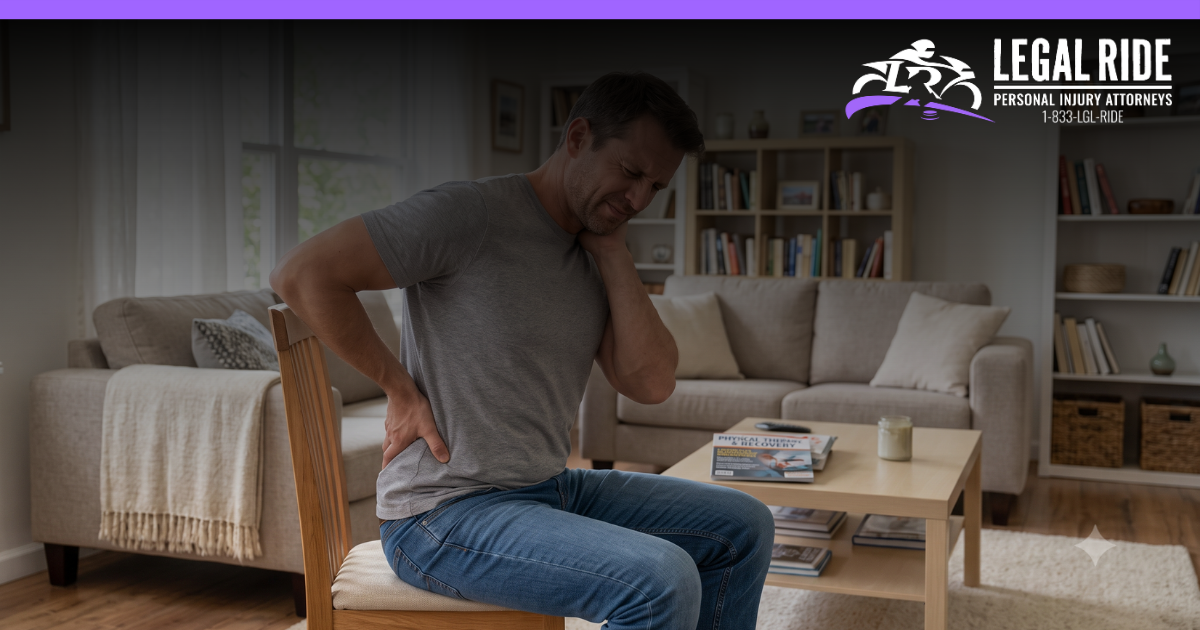
Pain after a crash may not appear right away. Adrenaline can temporarily dull pain signals, and symptoms may become more noticeable as the initial stress response fades, inflammation increases, and injured muscles begin to tighten. Neck pain, back pain, headaches, soreness, stiffness, and nerve symptoms can become harder to ignore over the next several days. Prompt medical care protects your health and creates records that may support a personal injury claim.
Right after a crash, your body floods itself with adrenaline. That chemical surge raises your heart rate, tightens blood vessels, sharpens attention, and pushes your brain toward immediate survival: get out of traffic, check your passenger, find your phone, look at the bike, the car, answer the officer, deal with the mess in front of you.
Adrenaline also dulls pain. That’s not toughness. That’s biology. The body prioritizes escape and reaction over comfort, so injuries can go unnoticed while your system is still lit up by the impact. A rider, driver, or passenger might walk around saying, “I’m fine,” even though a serious neck injury, back injury, shoulder injury, concussion, sprain, or deep bruise has already occurred.
Day Two and Day Three Tell a Different Story
As the initial stress response fades, the body’s reaction to the injuries becomes easier to feel. Inflammation may increase around injured tissue. Muscles can tighten to protect damaged areas. Swelling and stiffness may build, and irritated nerves can begin sending stronger signals. That’s why someone can leave a crash scene sore but functional, then wake up a day or two later with neck pain, headaches, back spasms, numbness, dizziness, or pain shooting into an arm or leg.
Concussion symptoms can also show up later or become harder to ignore once the chaos settles. Headache, nausea, light sensitivity, brain fog, sleep changes, balance trouble, and irritability need medical attention. Same goes for worsening pain, weakness, tingling, chest pain, abdominal pain, or any symptom that doesn’t match the “I’m probably fine” story you told yourself at the scene.
Toughing It Out Helps the Insurance Company
Skipping medical care after a crash is not a badge of honor. More importantly, it can allow an injury to worsen without proper evaluation. It may also give the insurance company room to argue that the crash did not cause the injury, that the injury was not serious, or that something else happened later. Those arguments may be wrong, but they can still create an unnecessary fight.
Medical care creates a timeline. The record shows when symptoms appeared, what the doctor found, what treatment was recommended, and how the injury interfered with work, driving, riding, sleep, and daily life. That documentation can become an important part of evaluating a personal injury claim. It does not guarantee a particular result because every claim depends on the facts, fault, available insurance coverage, medical evidence, and applicable law. It does help preserve a clearer picture of what you experienced and how the crash affected your life.
Get Checked, Then Get Backup
After a crash, get medical care and pay attention to symptoms over the next several days. Your body may not tell the whole truth at the scene.
Legal Ride is a personal injury law firm For Riders By Riders, built by experienced riders and trial lawyers who know the road, the insurance playbook, and the wreck aftermath. Call 833-LGL-RIDE to talk through what happened and what your next move may be.
FAQ: Pain After a Crash
Adrenaline, noradrenaline, cortisol, and endorphins flood the body after impact. Those chemicals raise alertness, increase heart rate, tighten blood vessels, and dull pain signals so you can react to danger. Pain isn’t gone; your brain is prioritizing survival tasks first, which is why someone can talk to police, move the vehicle, check the bike, or call family before the injury fully registers.
After the stress response fades, inflammation takes over. Injured muscles, ligaments, joints, discs, and nerves can swell, tighten, and become irritated. Whiplash, back strains, shoulder injuries, knee trauma, bruising, and nerve symptoms can all get louder after the first night of sleep, especially once the body stiffens. Headaches, dizziness, nausea, brain fog, light sensitivity, numbness, tingling, weakness, or pain shooting into an arm or leg should be checked promptly.
Prompt medical care matters first because it helps identify injuries and gives you a treatment plan. It also creates dated records of your symptoms, examination findings, diagnosis, restrictions, referrals, imaging, and follow-up care. Insurance companies may question long gaps in treatment or argue that an injury was unrelated to the crash. Treatment does not guarantee a legal result, but clear medical records can help show when your symptoms began and how the injuries affected your life.
This content is for informational purposes only and does not constitute legal advice. Every case is different. Consult an attorney for advice specific to your situation.
Legal Ride
Latest posts by Legal Ride (see all)
- What to Do After a Car Accident Without Insurance in Nevada - September 30, 2026