

After a vehicle or pedestrian crash in Nevada, terms like “bodily injury,” “pain and suffering,” and “emotional distress” often come up in insurance discussions. While they are used interchangeably, they do not mean the same thing. Each term points to a different crash-related loss, and context decides what is actually being valued. In this blog, we break down what each term means and how they fit into a personal injury claim.
| What Is A Personal Injury Claim? A personal injury claim is the overarching legal claim for all losses caused by a crash. Bodily injury, pain and suffering, and emotional distress are not separate claims; they are the three damage layers that sit within it. Understanding how each one works and how they connect determines the full value of a claim. |
What Does Bodily Injury Mean?
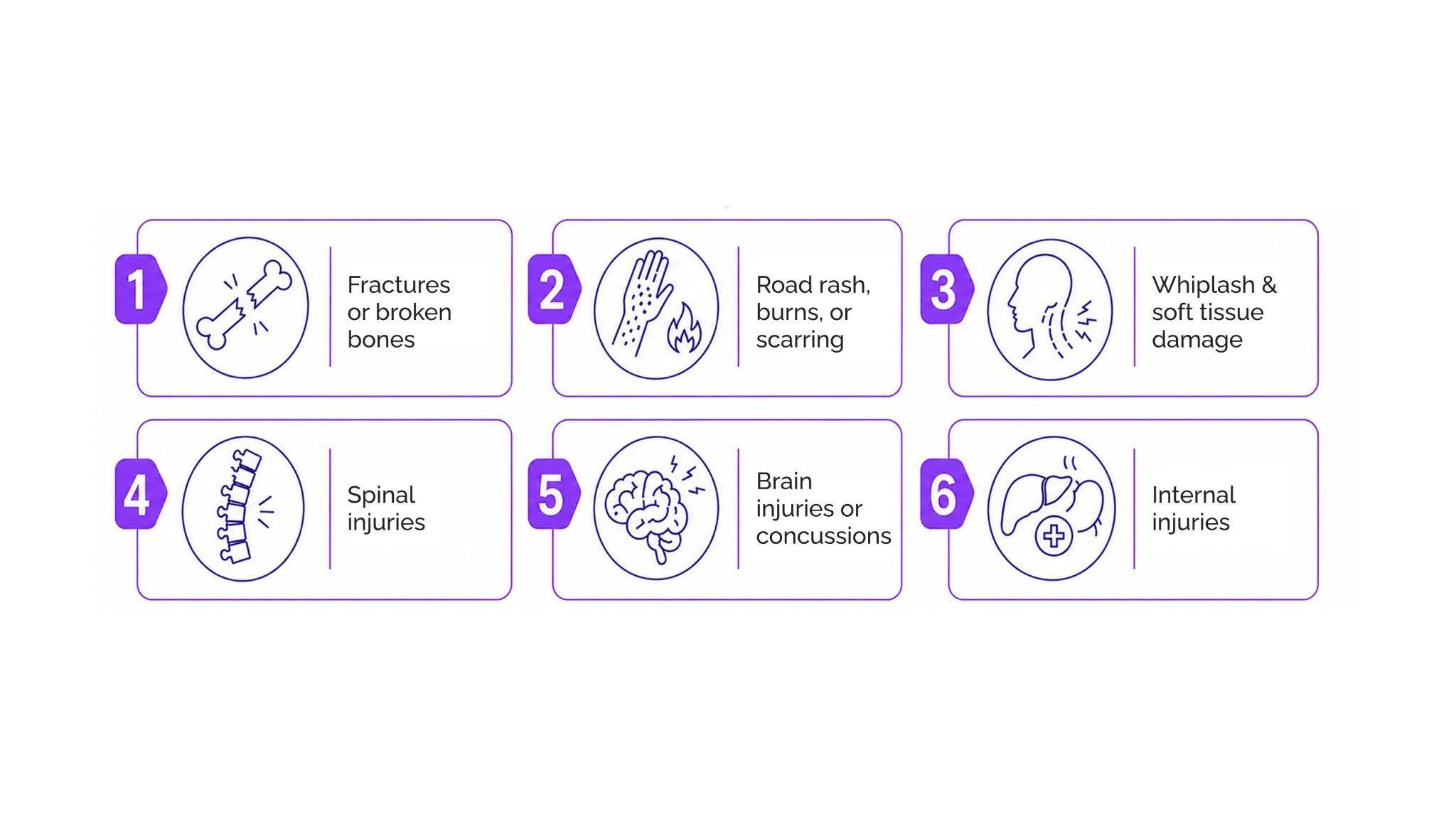
Bodily injury is physical harm to a person’s body. In a crash, that may include:
- Fractures or broken bones
- Road rash, burns, or scarring
- Whiplash and soft tissue damage
- Spinal injuries
- Brain injuries or concussions
- Internal injuries
The term is often used in auto insurance and legal liability. Nevada’s Division of Insurance states that minimum auto liability coverage includes $25,000 in bodily injury coverage per person, $50,000 per accident, and $20,000 in property damage coverage. Those limits matter, but are not the full value of an injury claim.
Bodily injury coverage may help pay for emergency care, surgery, therapy, rehabilitation, and future medical care when an insured driver is legally responsible.
What Does Personal Injury Mean?
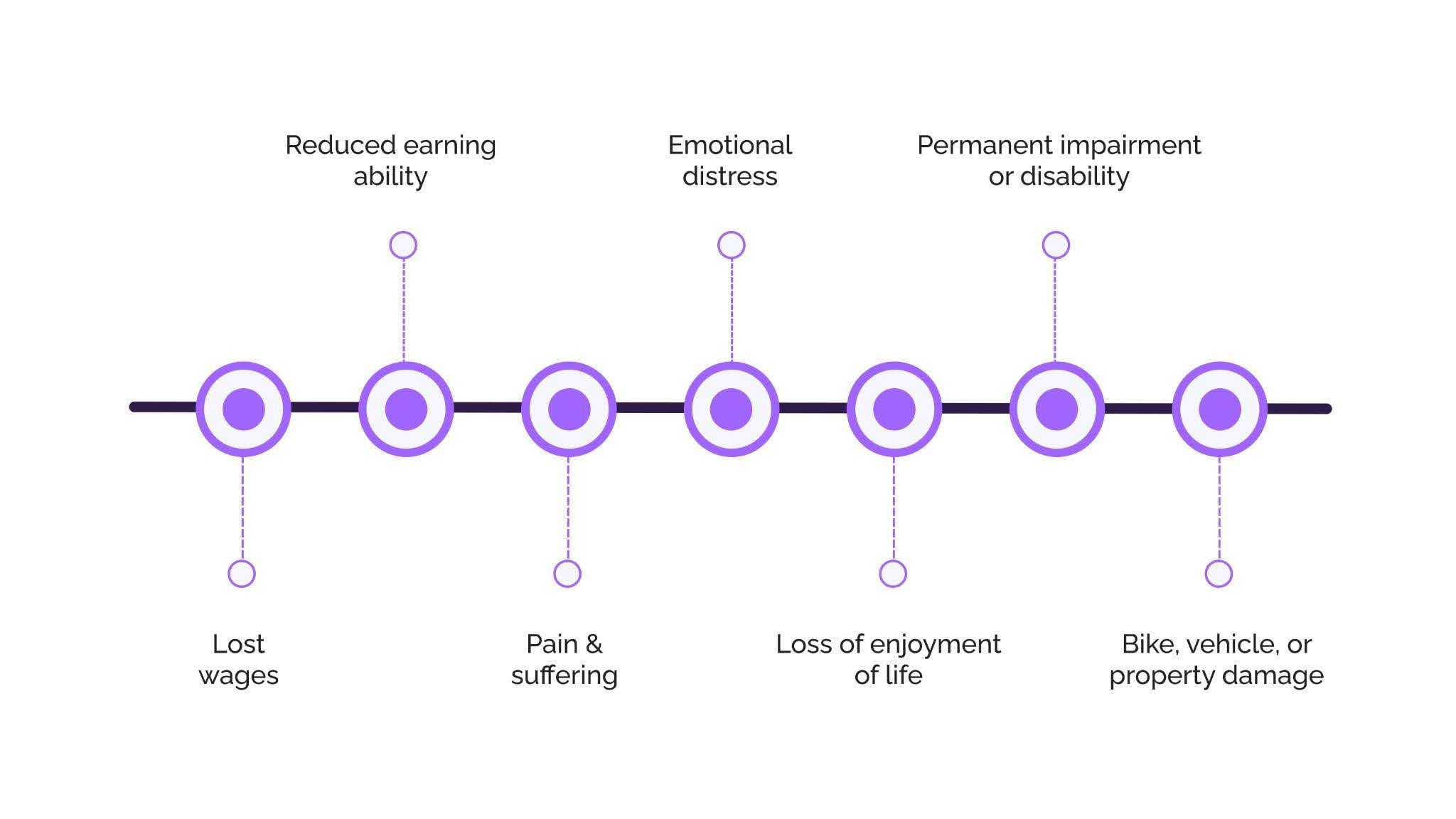
Personal injury happens when another person, business, or driver negligently harms you. Bodily injury can support a personal injury claim, but the claim does not stop at the injured body part. It may also include:
- Lost wages
- Reduced earning ability
- Pain and suffering
- Emotional distress
- Loss of enjoyment of life
- Permanent impairment or disability
- Bike, vehicle, or property damage
In a crash, that may mean that another driver was speeding, distracted, impaired, driving too closely, or driving aggressively.
What Pain And Suffering Covers Beyond Medical Bills
Pain and suffering cover physical discomfort and disruption to one’s life. It may include chronic pain, recovery pain, sleep disruption, limited mobility, lost hobbies, and trouble lifting, driving, riding, working, or exercising.
For example, if a rider breaks their wrist in a motorcycle accident:
- The surgery bill is economic damage.
- Throbbing pain may support a claim for pain and suffering.
- Loss of grip strength may indicate lifestyle disruption.
- Disrupted sleep may show a daily impact.
Helpful evidence includes treatment notes, therapy records, work restrictions, photos, prescriptions, pain journals, and witness statements.
What Emotional Distress Means For Crash Survivors
Emotional distress is the psychological impact of the crash. It can overlap with pain and suffering, but it is not the same thing.
- Pain and suffering center on physical discomfort and disruption.
- Emotional distress centers on fear, anxiety, trauma, and emotional consequences.
Crash survivors may experience fear of driving, panic near intersections or trucks, nightmares, flashbacks, irritability, withdrawal, depression, embarrassment from scarring, or anxiety about bills and missed work.
Mental harm can affect relationships, work, sleep, confidence, and your willingness to return to the road. Evidence may include therapy notes, prescriptions, sleep logs, journals, and witness statements.
How a Single Crash Becomes a Full Personal Injury Claim
When a driver turns left across a rider’s lane, the rider brakes, hits the vehicle, and lands on the pavement. Bodily injury comes first, followed by pain, suffering, and emotional distress.
| Damage layer | What it looks like |
| Bodily injury | Broken wrist, road rash, concussion, and shoulder strain |
| Pain and suffering | Surgery pain, sleep loss, limited grip, missed riding, and difficult therapy |
| Emotional distress | Panic in traffic, nightmares, fear of intersections, anxiety returning to work |
Each one becomes part of a single personal injury claim. Bodily injury is where the claim starts, not where it ends. A strong personal injury claim follows the full chain from the physical harm, through the disruption it causes, to the mental toll it leaves behind.
One crash can damage your body, disrupt your life, and affect your mental state. A strong personal injury claim should account for each layer, not just bills.
Why Nevada Insurers Focus On Bodily Injury Limits First
Insurers often start with bodily injury coverage because policy limits define available liability insurance. This does not limit your claim to bodily injury. A full crash claim may also consider future treatment, lost income, reduced earning capacity, pain and suffering, emotional distress, impairment, scarring, disability, and property damage.
Nevada timing also matters:
- Two-year filing deadline: Many Nevada injury claims must be filed within two years under NRS 11.190.
- Comparative negligence: Your recovery can be reduced if you share fault.
- Fault threshold: Recovery may be barred if your fault is greater than the fault of the parties you pursue.
What Evidence Helps Prove Each Damage Category
You should use evidence that matches the damage you are claiming:
| Damage Type | Evidence That Helps |
| Bodily injury | ER records, imaging, diagnoses, treatment plans, prescriptions, and surgery notes |
| Pain and suffering | Pain journal, therapy notes, work restrictions, photos, mobility limits, daily activity notes |
| Emotional distress | Therapy records, sleep logs, prescriptions, journal entries, witness statements |
| Lost income | Pay stubs, employer letters, tax records, and missed-shift records |
| Future losses | Doctor opinions, specialist reports, rehabilitation plans, disability evaluations |
To protect your claim:
- Follow your treatment plan
- Save every medical and insurance record.
- Document symptoms as they develop
- Keep proof of missed work and reduced income.
- Avoid premature recorded statements
- Do not sign a release until you understand the full claim value.
Get Legal Support To Understand Your Injury Claim After A Crash
If you’re trying to make sense of your injuries, bills, and what comes next, don’t go through it alone. At Legal Ride, we help riders and drivers get clear guidance and strong legal support after a crash. As a firm with in-depth experience in motorcycle accidents and personal injury claims, we can help you assess your losses and pursue fair compensation for more than just medical bills.
Personal Injury and Bodily Injury in Nevada FAQ
Bodily injury is the physical harm from the crash. Personal injury is the broader legal claim that includes bodily injury plus lost income, pain and suffering, emotional distress, and other losses.
Pain and suffering cover physical discomfort and lifestyle disruption. Emotional distress covers the psychological impact, such as anxiety, fear of driving, nightmares, or depression, after the crash.
Yes. One crash can injure your body, disrupt your daily life, and affect your mental health. A strong claim should account for all three, not just the medical bills.
For pain and suffering, helpful evidence includes treatment notes, pain journals, work restrictions, and photos. For emotional distress, therapy records, sleep logs, prescriptions, journal entries, and witness statements can all support the claim.
Insurers start with bodily injury limits of $25,000 per person and $50,000 per accident, but those don’t cap your claim. A full personal injury claim can pursue pain and suffering, emotional distress, lost earning capacity, and future losses beyond the policy.
Legal Ride
Latest posts by Legal Ride (see all)
- What to Do After a Car Accident Without Insurance in Nevada - September 30, 2026