


The first hour after a motorcycle crash can have a bigger impact on your claim than most riders realize. Decisions made at the scene, in the emergency room, and during the first few days afterward can affect everything from medical treatment to insurance coverage and compensation. The problem isn’t the crash itself. It’s what happens between the impact and the insurance call.
This blog provides a clear, step-by-step plan covering the first 60 minutes, the first 72 hours, and the legal moves that follow after a motorcycle accident in Nevada. You will learn what to document, when to see a doctor, how Nevada fault rules affect your payout, and the right time to bring in a lawyer.
Why Nevada Motorcycle Crashes Hit Harder
Nevada had 83 motorcycle deaths in 2025, the same number recorded in 2024, according to crash data from the Nevada Office of Traffic Safety. Distracted driving remains one of the safety issues Nevada officials target through statewide enforcement campaigns. The first mistake most riders commit is underestimating their injuries at the scene. Adrenaline masks pain, so internal bleeding, brain injury, concussions, and spinal damage often surface hours later.
What To Do In The First 60 Minutes After A Motorcycle Accident In Nevada
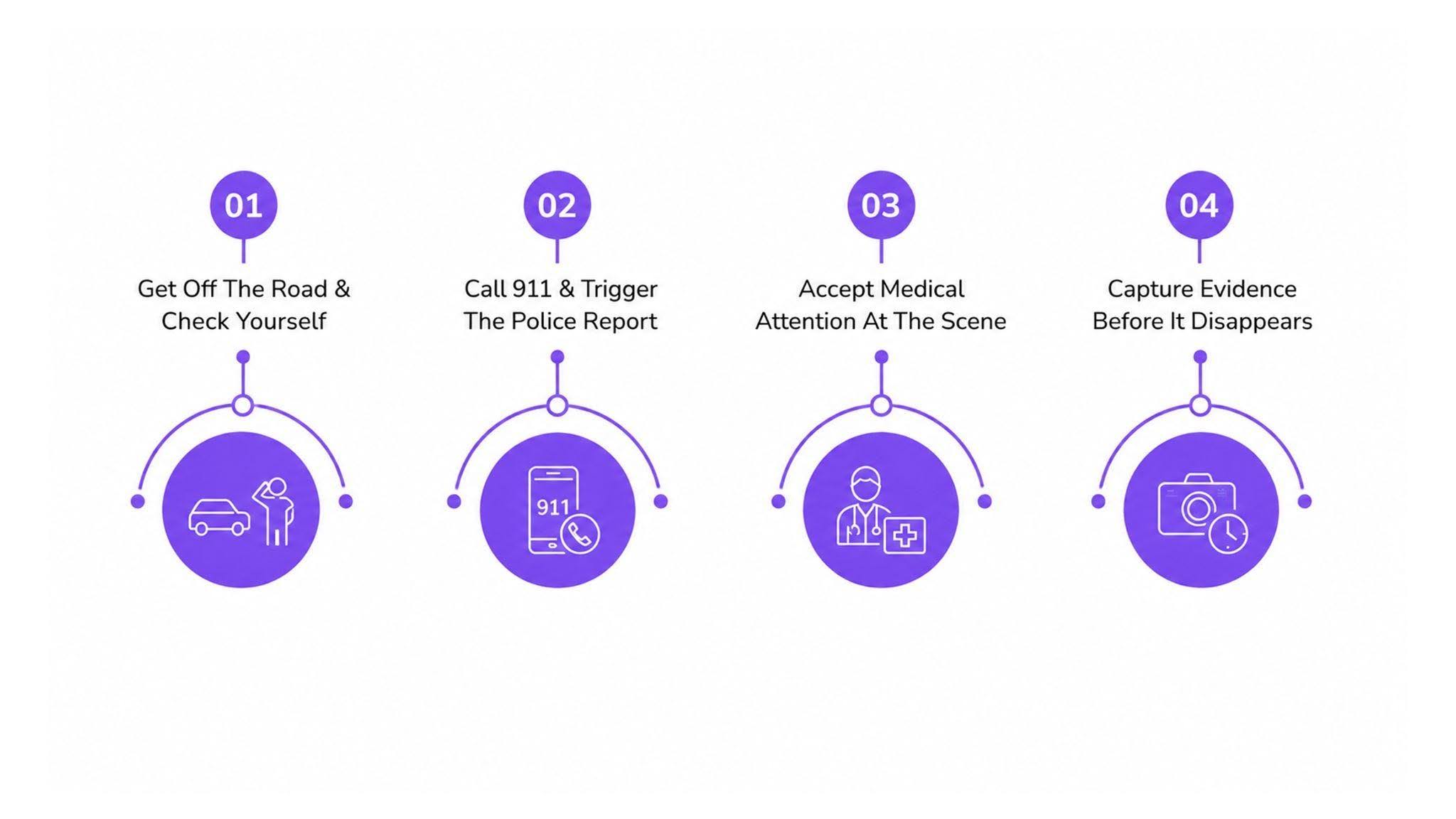
Your priority is to stay alive and protect your future claim. Here is the order that works:
1. Get Off The Road and Check Yourself
If you are conscious and mobile, move to the shoulder. Do not remove your helmet if you feel neck or head pain. Pulling it off incorrectly has paralyzed riders before, wait for trained medical personnel unless immediate danger requires movement.
2. Call 911 and Trigger The Police Report
Nevada law (NRS 484E.030) requires drivers in any crash involving personal injury or significant property damage to exchange information and render aid. Call dispatch even if the other driver begs you not to. A police report is the backbone of every insurance claim and lawsuit.
3. Accept Medical Attention At The Scene
Tell paramedics about every spot that hurts, even mildly. Refusing the ambulance gives insurance adjusters ammunition to argue you were not really hurt. Going to the hospital is documentation, not weakness.
4. Capture Evidence Before It Disappears
If you have the physical ability, pull out your phone and capture:
- Wide shots of both vehicles and the road
- Skid marks, debris, and fluid trails
- Traffic signs, signals, and lane markings
- Your gear, helmet damage, and visible injuries
- The other driver’s license plate, insurance card, and license
Spontaneous admissions from the other driver, like “I never saw you” or “I was on my phone,” might not survive once an adjuster gets involved, so record them on video or write them down verbatim.
Collecting Information At The Motorcycle Accident Scene In Nevada
The chaos after a crash makes it easy to forget the basics. Use this table as a checklist if a passenger or family member is there to help.
| Information To Gather | Why You Need It |
| Other driver’s name, address, phone | Required for any insurance claim |
| Insurance company and policy number | Determines coverage limits |
| Vehicle make, model, plate, VIN | Identifies the at-fault vehicle |
| Witness names and contact info | Independent witnesses decide liability fights |
| Officer’s name and badge | Helps you obtain the report later |
Get the report number before the officer leaves. Download this free post-accident checklist and keep it under your seat.
What To Do In The First 72 Hours After A Motorcycle Accident In Nevada
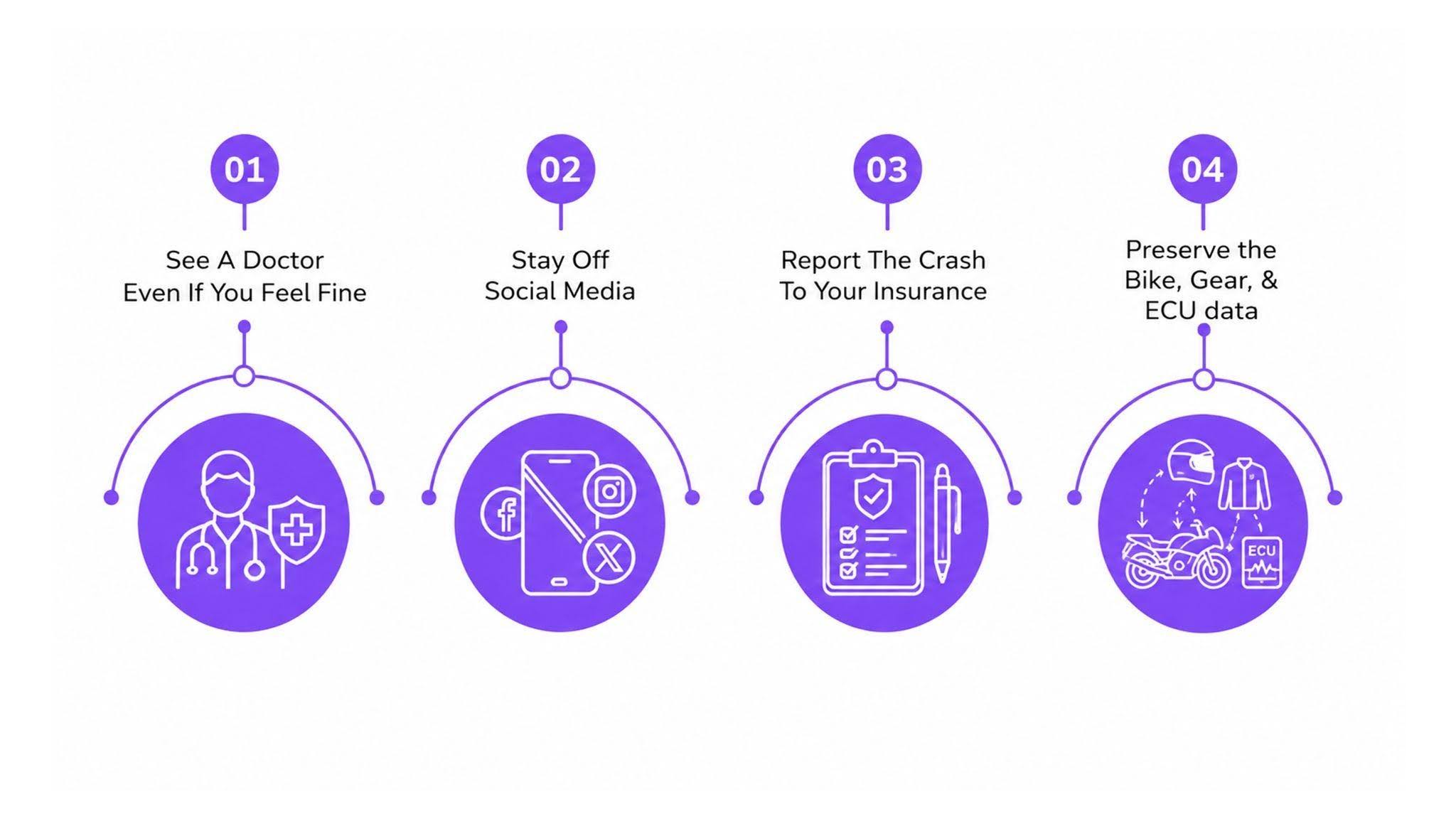
The window right after the wreck is where claims can get won or lost. Many riders walk away from a crash convinced they got lucky. Then they wake up the next morning unable to turn their neck, lift their shoulder, or remember parts of the impact. That’s why the first few days matter so much. Here is your three-day plan.
See A Doctor Even If You Feel Fine
Soft tissue damage, traumatic brain injuries, and herniated discs often surface 24 to 48 hours later. The Centers for Disease Control and Prevention confirms that concussion symptoms frequently appear delayed. A gap between your crash date and your first medical visit gives insurance companies a reason to deny your claim.
Stay Off Social Media
Insurance investigators may screenshot your Facebook, Instagram, Strava, and TikTok the moment you file a claim. A single “I’m okay, thanks for the prayers” post or a gym check-in becomes their argument that you were not really hurt. Lock your accounts, stop posting, and ask friends not to tag you.
Report The Crash To Your Insurance
Nevada policies require prompt notification, often within a few days. Stick to facts. Do not speculate about fault or give a recorded statement to the other driver’s insurance or your own insurance before you have spoken with your legal counsel. Understand Nevada motorcycle insurance coverage before you talk to any adjuster.
Preserve the Bike, Gear, and ECU data
Some modern motorcycles may contain electronic data that can assist in reconstruction of the accident including stored throttle position, speed, and braking data in the ECU, but that data gets wiped during repair. Do not authorize repairs or scrap the bike until a reconstruction expert downloads it. Keep your helmet, jacket, gloves, and boots in a sealed bag as physical evidence.
Nevada Laws That Affect Your Payout After A Motorcycle Crash
Nevada follows a modified comparative negligence rule. Under NRS 41.141, you can recover damages if your share of fault is not greater than the fault of the party or parties you are suing, but your percentage of fault reduces your award. The Nevada DMV outlines the state’s motorcycle helmet requirement and the mandatory minimum liability insurance limits of 25/50/20.
The Zero Fatalities Nevada campaign and NHTSA confirm that left-turn collisions, speeding, and impaired drivers dominate fatal Nevada motorcycle crashes. Lane splitting may become an issue in determining fault and could affect compensation depending on the circumstances of the crash.
What A Motorcycle Accident Lawyer Can Do
A rider-focused attorney is not just a phone call screener. The right counsel can preserve critical evidence before it disappears including sending the request to preserve ECU data, hire reconstruction experts, block recorded statement traps, fight medical lien reductions, and defend your rights with real trial readiness.
Call counsel if any of these apply:
- You suffered broken bones, surgery, or a head injury
- The other driver disputes fault
- The insurance company offers a quick settlement
- A loved one died in the crash
- You drive for rideshare or delivery, and were working at the time
Get The Right Legal Support After A Motorcycle Accident In Nevada

The first call you make should not be to the insurance company. It should be to someone who already knows how Nevada crash cases get won or lost in the days right after impact. At Legal Ride, every claim starts with straight answers about your injuries, your evidence, and your options.
FAQ: What to Do After a Crash in Las Vegas
You typically have two years from the date of the crash to file a personal injury lawsuit, and three years for property damage. Wrongful death claims also carry a two-year deadline.
Yes, if the crash caused injury, death, or property damage over $750, and no officer responded. You must file an SR-1 form within 10 days.
Your own uninsured or underinsured motorist coverage steps in. Nevada does not require UM/UIM, so check your policy before you need it.
Nevada’s universal helmet law applies. Failure to wear a helmet may become an issue in certain injury claims and could affect damages depending on the circumstances and injuries involved.
Value comes from medical bills, lost wages, future care costs, permanent disability, pain and suffering, and the at-fault driver’s policy limits.
This content is for informational purposes only and does not constitute legal advice. Every case is different. Consult an attorney for advice specific to your situation.
Legal Ride
Latest posts by Legal Ride (see all)
- What to Do After a Car Accident Without Insurance in Nevada - September 30, 2026