


In this post:
- Self-driving vehicle crashes may involve responsibility beyond a human operator, including vehicle owners, manufacturers, automated-driving developers, or other companies.
- Electronic vehicle data may show whether automated mode was active, how the vehicle responded, and whether warnings or system failures occurred.
- Motorcyclists face particular risks when automated systems fail to detect, track, or respond properly to a bike.
- Compensation after an autonomous-vehicle crash depends on the injuries, available evidence, insurance coverage, and which party contributed to the collision.
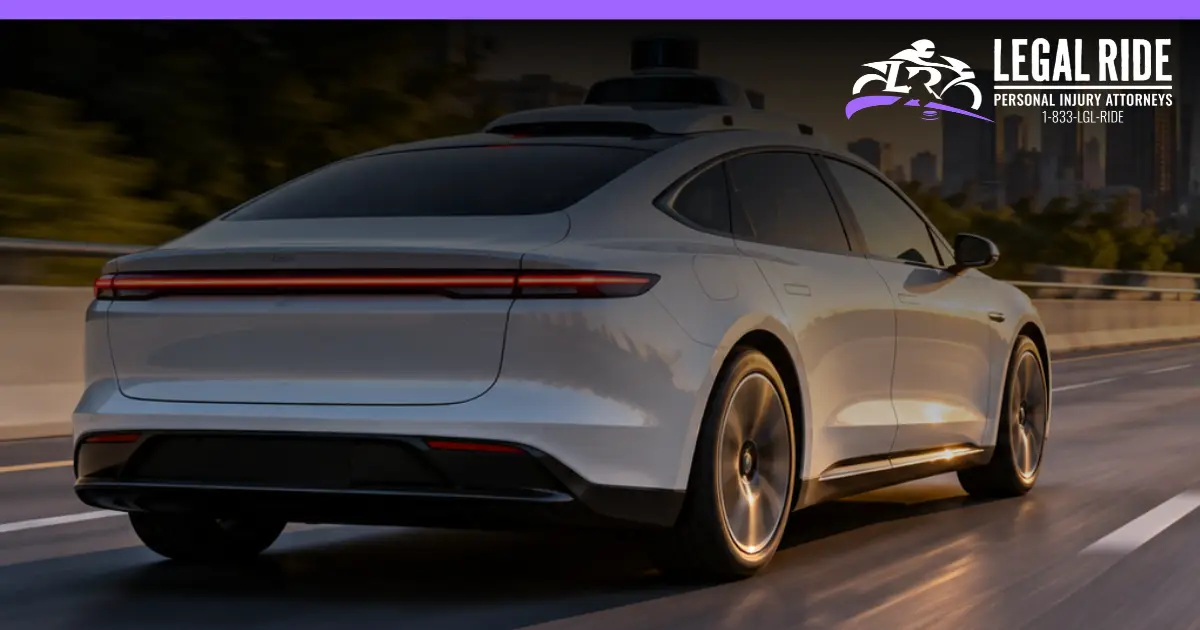
If a driver hits your motorcycle, you usually know where the investigation starts: with the person operating the vehicle. A self-driving car can make that much harder. Was the human operator responsible? Did the vehicle fail to detect the bike? Did its software make the wrong decision? Did a maintenance or mechanical problem contribute?
Those answers can determine who may be responsible for your injuries and where compensation may come from. For riders, that also raises a bigger concern: whether autonomous technology is reliably detecting and responding to motorcycles on the road.
Riders Can’t Be an Afterthought
Motorcycles are smaller and harder for other road users to see, while riders have little physical protection in a collision. Self-driving systems rely on cameras, radar, other sensors, and software to identify traffic and respond.
For riders, here’s the main safety issue: the system has to recognize the motorcycle, track its movement, and react appropriately. Riders already know what “I never saw you” can cost. A computer gets no free pass for missing a bike.
The physical evidence still counts in a motorcycle crash. Lane position, vehicle damage, and helmet-cam or dash-cam footage may help establish what happened.
Responsibility May Reach Beyond One Driver
An autonomous-vehicle crash may require a look at several people or companies. Depending on what failed, responsibility may lie with:
- A human operator who was required to monitor the vehicle or take control
- The vehicle owner or commercial operator if maintenance or operation contributed
- A manufacturer or automated-driving developer if a defect contributed
- A third party if an unauthorized modification created the defect
Identifying fault after a collision requires tracing the failure to the person or company responsible for that part of the vehicle or system.
The Vehicle May Hold Critical Evidence
Autonomous vehicles can generate electronic records that help reconstruct a crash, including:
- Whether automated mode was engaged
- Sensor and camera data
- Speed, braking, steering, and vehicle path
- System warnings or takeover requests
- Software versions, updates, and maintenance history
Those records may help separate human error from a system failure. Other crash evidence may still be needed to establish what happened on the road.
If responsibility is established, an injury claim may seek compensation for medical expenses, lost income, damaged property, future needs, and pain and suffering, depending on the facts.
When the Driver Is Software, Follow the Evidence
Self-driving technology can make an injury investigation wider and more technical. Legal Ride knows Nevada roads from the saddle and from trial. If an autonomous vehicle injured you while riding, driving, or riding as a passenger, call 833-LGL-RIDE. We can examine the crash, preserve relevant evidence, and identify the parties and insurance policies that may be responsible.
FAQ: Self-Driving Vehicle Accidents in Nevada
Responsibility depends on what contributed to the collision. A human operator may be involved if they were required to monitor the vehicle or take control. A vehicle owner or commercial operator may be responsible if maintenance or operation contributed. A manufacturer, automated-driving developer, or another company may also become part of the claim if a vehicle defect, software problem, or improper modification played a role. Determining responsibility may require examining both roadway evidence and vehicle-stored data.
The vehicle itself may contain valuable information about the seconds leading up to the collision. Records may show whether automated mode was active, the vehicle’s speed and path, braking or steering activity, sensor information, system warnings, and requests for a human operator to take control. Photos, video, witness accounts, vehicle damage, police reports, and medical records may provide additional evidence about what happened and the resulting injuries.
The basic injury-claim process still requires evidence of responsibility and damages, but motorcycle crashes can raise distinct factual issues. Investigators may need to examine whether the automated system detected the motorcycle, tracked its position correctly, and responded appropriately as traffic conditions changed. Riders also face a greater risk of serious injury due to limited physical protection, which may increase the medical, financial, and personal losses involved in the claim.
Legal Ride
Latest posts by Legal Ride (see all)
- Driverless Cars: Are Riders Being Forgotten by Self-Driving Technology? - October 21, 2026