

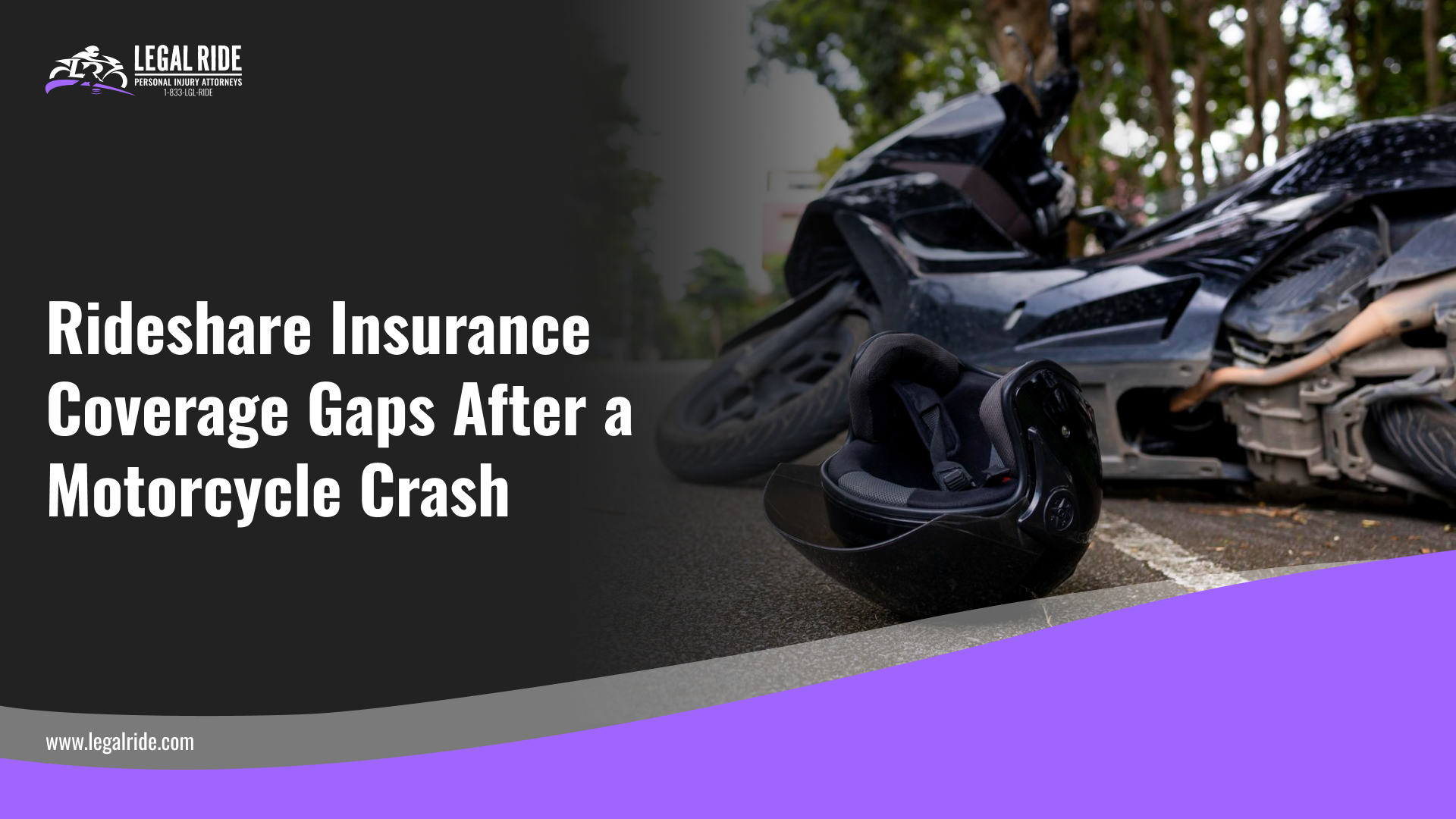
You are riding through an intersection when a car turns across your lane and hits you. After the collision, you notice an Uber or Lyft sticker on the windshield. The driver tells you the app was open, but nobody had requested a ride yet.
That detail sounds small. It isn’t. Rideshare vehicles switch insurance coverage depending on what’s happening in the driver’s app at the moment of the crash.
The driver’s app status could affect which policy applies and the amount of liability coverage required at that stage.
Right now, though, none of that is your first job. Get checked out, get home safely, and let the coverage question wait until you are ready for it. When you understand the driver’s app status and hold on to the right evidence, you are in a position to actually use the coverage that applies.
Here’s how the app-status gap works, where it tends to cause real problems for riders, and what to hold onto after a crash like this.
How Does a Rideshare Driver’s App Status Affect Insurance Coverage After a Motorcycle Crash?
When a rideshare vehicle hits your motorcycle, the decal on the car doesn’t tell you which insurance applies. The driver’s app status is the starting point.
The Driver Was Offline
If the driver wasn’t logged into Uber, Lyft, or another app, the car was generally just being used for personal travel. The rideshare company’s policy usually doesn’t apply in this case. Their personal auto policy is the first place to look, though what it actually covers still depends on the policy terms, the crash facts, and the evidence.
The Driver Was Online and Waiting for a Request
This period begins when the driver logs in and becomes available for rides but hasn’t accepted one yet. It often raises the most coverage questions.
The personal insurer could review whether the policy excludes rideshare activity, and the platform’s own coverage during this stage is generally more limited than during an accepted trip. During the waiting period, Nevada requires lower liability limits than it requires after the driver accepts a ride. Because those requirements have changed over time, the policies and laws in effect on the date of the crash should be reviewed with your personal injury attorney.
That’s a real gap, and it’s exactly why the app-status question matters so much after a crash. Don’t assume either policy applies in full until the app status and policy terms have actually been reviewed.
The Driver Had Accepted a Ride
Once the driver accepts a request, this period generally includes the drive to the pickup location and the passenger’s trip.
Nevada requires higher liability coverage when a driver accepts a ride than when the driver is waiting for a request.
Coverage amount and fault are two different questions, though. Photographs, witness statements, police reports, vehicle damage, and app records are what help establish how the collision actually happened.
Your medical records are a separate track entirely; they document your injuries, treatment, and recovery on their own timeline, independent of how the fault investigation plays out.
Which Insurance Policies Could Be Reviewed After the Crash?
After a rideshare crash, you may hear about several insurance policies. That doesn’t mean every policy applies. Coverage depends on the driver’s app status, the policy language, the crash facts, and the insurance you purchased.
The Driver’s Personal Auto Policy
If the driver was offline, their personal policy is usually the first place to look. Insurers will also check whether the car was doing rideshare work at the time, even if the app wasn’t open when you got hit.
The Rideshare Platform’s Policy
If the driver was logged into the app, the rideshare company’s policy comes into play; how much depends on which app-status window applies, covered above
Your Motorcycle Policy
Don’t overlook your own coverage, either. Uninsured motorist coverage steps in when there’s no liability insurance to work with. Underinsured motorist coverage helps when the available limits fall short
MedPay could help with qualifying medical bills, while collision coverage could address motorcycle damage, subject to your deductible and policy terms.
Your Health Insurance
Your health insurance can cover treatment while the liability question is still being sorted out. It has nothing to do with who caused the crash, and there could be reimbursement issues down the line.
When Do Rideshare Insurance Coverage Gaps Arise After a Motorcycle Crash?
A rideshare insurance gap doesn’t always mean that no insurance exists. It could mean that lower limits apply, a particular type of coverage is unavailable, or more than one insurer is reviewing which policy must respond.
The Waiting Period Creates the Main Coverage Question
If the driver was online and waiting for a request, their personal insurer could review whether the policy excludes rideshare activity altogether.
At the same time, Uber or Lyft’s coverage at this stage is usually more limited than what’s available once a trip is accepted. A “gap” doesn’t always mean no insurance exists. More often, it means lower limits, fewer types of coverage, or a fight over which policy actually applies.
The Driver’s App Status Could Be Disputed
The driver might say the app was off. The records might say otherwise. App logs, timestamps, trip data, witness accounts, and other electronic evidence can help sort out what actually happened.
The Driver Was Logged Into Several Apps
A driver may be available through Uber, Lyft, or a delivery platform during the same period. Each platform’s records and policy terms may need separate review. Being logged into several apps does not automatically mean several policies apply.
The Ride Was Arranged Outside the Platform
A driver and passenger could arrange a cash ride or private trip without ever going through the app. If that’s what happened, the rideshare company’s normal coverage may not apply at all, since the trip was never accepted or tracked through the service.
That doesn’t mean no insurance is available. The driver’s personal policy, any commercial coverage, and other applicable insurance still need to be reviewed. Messages, payment records, witness statements, and phone records can all help piece together how the ride actually came together.
Limited Coverage Could Affect a Serious Injury Claim
Motorcycle injuries can mean emergency care, surgery, rehabilitation, and significant time off work. If the liability coverage on the table is limited, it might not cover everything you’re dealing with.
Your own motorcycle policy, including any uninsured or underinsured motorist coverage, is worth a look too. Health insurance can help with treatment in the meantime, but it doesn’t settle the auto-insurance question. Hold on to your evidence, report the crash accurately, and don’t guess the driver’s app status. It’s also worth talking to an attorney before giving a detailed recorded statement to the other side’s insurer
Why Do Rideshare Claims Often Require More Investigation?
A rideshare decal tells you the car does rideshare work, not that the platform’s policy applied when it hit you. App status can change in seconds, and the records that prove it usually sit with the driver or the rideshare company, not with you.
More than one insurer might end up looking at the same crash. Who caused it is one question. Which policy has to pay is another. They are connected, but they are not the same question.
Getting ahead of it early helps preserve trip logs, timestamps, video, and witness details before they disappear. An attorney can also help identify which policies are actually in force, request the app-status records, and deal directly with the insurers.
What to Do After a Crash With a Rideshare Vehicle?
Motorcycle injuries such as road rash, fractures, concussions, and soft-tissue damage may not be obvious immediately. Adrenaline could mask pain or other symptoms after the impact. Here is what to do immediately after a crash:
- Check yourself for injuries and call for medical help.
- Report the collision to law enforcement.
- Photograph the motorcycle, vehicle, damage, road, final positions, license plate, and rideshare sticker.
- Collect the driver’s name, insurance details, and rideshare platform.
- Do not handle the driver’s phone or demand access to the
- app.
- Save witness details and helmet-camera or dash-camera footage.
- Preserve your helmet, riding gear, towing records, repair estimates, and medical documents.
- Get legal advice before giving a detailed recorded statement to the opposing insurer.
- Notify your insurer without guessing about speed, fault, or app status.
Review Your Rideshare Accident Claim With Legal Ride
Rideshare and delivery crashes often involve more than one insurance policy, especially when the driver’s app status is unclear.
If you were injured in Nevada, Legal Ride can review the crash details, identify applicable coverage, and explain the next steps based on your situation.
Contact Legal Ride today to protect your rights and your claim by calling 833-LGL-RIDE.
Nevada Ride Share Insurance Coverage FAQ
Potentially, but coverage during the waiting period is generally different from coverage after a trip has been accepted. The driver’s app status, personal policy, platform policy, and jurisdiction all require review.
Possible evidence includes the driver’s statements, platform records, timestamps, trip information, phone data, police documentation, passenger testimony, and other electronic records. A rideshare decal alone does not prove the driver was active.
Often, yes. UM/UIM, MedPay, and collision coverage can all come into play, depending on your policy and what’s already on the table from other insurers.
A ride arranged outside the platform could fall outside the rideshare company’s normal insurance structure. The driver’s personal policy, any separate commercial coverage, and other available insurance would need to be reviewed.
This content is for informational purposes only and does not constitute legal advice. Every case is different. Consult an attorney for advice specific to your situation.
Legal Ride
Latest posts by Legal Ride (see all)
- What to Do After a Car Accident Without Insurance in Nevada - September 30, 2026