

In this post:
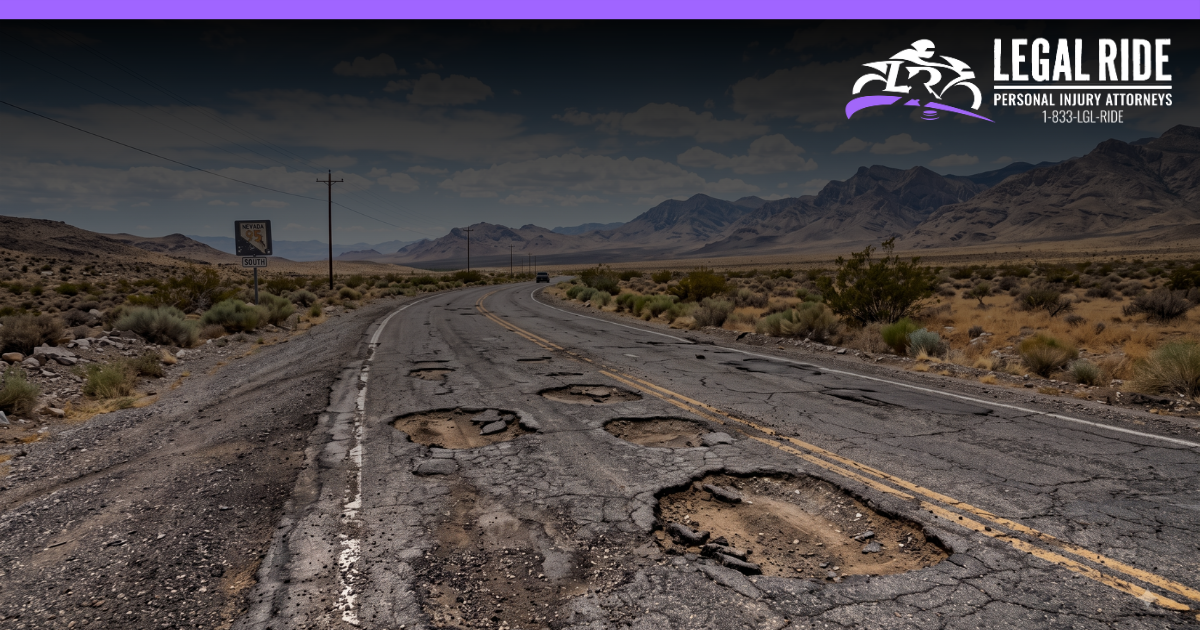
Gravel, potholes, and construction plates can cause motorcycle crashes with little warning. Responsibility may fall on a government agency, road contractor, utility company, property owner, another driver, or several parties. Evidence from the roadway can disappear quickly, so prompt investigation can protect an injured rider’s options.
A rider enters a familiar curve and suddenly finds loose gravel scattered across the travel lane.
A pothole hides in shadow.
A steel construction plate sits higher than expected or becomes slick under the tires.
The front tire loses traction, the bike drops, and the rider pays the price.
A construction sign sends traffic into the wrong path.
A flagger waves a rider forward when the lane ahead is not actually clear.
For someone inside a passenger vehicle, these conditions may mean a hard jolt or damaged tire.
For a motorcyclist, they can mean an immediate loss of traction or control.
Roadway condition cases are real cases. Legal Ride has recovered compensation for injured people in situations involving dangerous road and construction conditions. But determining who may be responsible requires much more than pointing at the pothole or identifying the government agency whose name appears on the road project.
The investigation has to answer a larger question:
Who controlled the condition, who created it or knew about it, what warnings were provided, who was directing traffic, and what actually caused the rider to go down?
Responsibility Depends on What Actually Happened
Road-hazard claims depend on who controlled the area, who created or knew about the dangerous condition, what warnings or traffic directions were provided, and how those circumstances contributed to the crash.
Responsibility may rest with a public agency, private contractor, subcontractor, utility company, property owner, or another party involved with the roadway. A contractor, for example, may have created a dangerous pavement transition or left debris in an active lane. Traffic-control personnel may have provided misleading directions or sent riders toward an unsafe area. In some cases, several parties may have controlled different parts of the work.
Claims involving government agencies have added layers. Nevada has waived governmental immunity for many tort claims, but important exceptions remain, including protections involving certain discretionary decisions and claims based on a government’s failure to inspect or discover a roadway hazard. The specific conduct that contributed to the crash can make a major difference in determining who may be held responsible.
Useful evidence may include:
- prior complaints
- maintenance or construction records
- work permits
- photographs
- video
- witness accounts
- the bike’s condition.
In a construction zone, signs, cones, lane configurations, company names, and instructions from flaggers or other traffic-control personnel may also help establish what the rider encountered. Because the scene can change quickly, preserving that evidence as soon as reasonably possible can be important after an accident.
Rider Conduct Is Part of the Fault Calculation
Insurance companies may argue that the rider was traveling too fast, braked improperly, chose the wrong lane position, or should have avoided the hazard. But roadway crashes rarely happen in a vacuum. Traffic, visibility, available escape routes, and directions from construction personnel may all affect what the rider reasonably could have done.
Nevada uses modified comparative negligence. A rider’s own negligence generally doesn’t bar recovery unless it is greater than the negligence of the defendant or the combined negligence of multiple defendants. When recovery is allowed, the rider’s damages are reduced according to their percentage of fault.
When the Road Takes You Down, Preserve More Than the Pothole
After a roadway crash, the obvious instinct is to photograph whatever caused the motorcycle to go down.
Do that.
Then photograph everything around it.
The strongest evidence may end up being the misleading sign fifty yards earlier.
The cones directing traffic toward the hazard.
The worker who waved the rider forward.
The blocker that prevented the rider from seeing what was ahead.
The construction company’s truck.
The condition of the adjacent lane.
Or footage showing that the rider had nowhere safe to go.
Road-hazard cases can involve a lot of moving parts. Liable parties like public agencies, contractors, insurers, and strict procedural rules may need to be contacted, which is a lot of work for just one person. The team at Legal Ride knows motorcycles from the saddle and the courtroom. We ride, teach, and represent injured people across Nevada roadways.
Call 833-LGL-RIDE to discuss what happened and fight for your right to compensation.
FAQ: Las Vegas Road-Hazard Injury
Depending on the facts, potentially responsible parties may include a government agency, construction contractor, traffic control contractor, utility company, property owner, another driver, or more than one party. The investigation should identify who controlled or created the condition and what conduct actually contributed to the crash.
Yes. Nevada has waived sovereign immunity in many situations, but significant statutory exceptions remain. NRS 41.032 addresses certain discretionary governmental functions, and NRS 41.033 provides immunity for claims based on failure to inspect or discover hazards in streets and public highways. The particular facts and legal theory matter.
Potentially. The existence of a sign does not by itself answer whether traffic control was reasonable. Its location, visibility, accuracy, meaning, and relationship to the actual roadway conditions may all matter.
The person’s directions may become important evidence. Identify the worker or company if possible, preserve witness information and video, and document the signs, cones, traffic pattern, and directions that were being given.
Possibly. Nevada comparative negligence permits responsibility to be divided in appropriate cases. The analysis may include speed, traffic, lane position, visibility, available escape routes, traffic control, warnings, and the amount of time the rider actually had to react.
Roadway conditions can change rapidly. Potholes may be repaired, gravel swept away, steel plates repositioned, signs moved, workers reassigned, and traffic patterns changed. Early photographs and video can preserve evidence that may no longer exist later.
This content is for informational purposes only and does not constitute legal advice. Every case is different. Consult an attorney for advice specific to your situation.
Legal Ride
Latest posts by Legal Ride (see all)
- What to Do After a Car Accident Without Insurance in Nevada - September 30, 2026